Rally racing Citroen

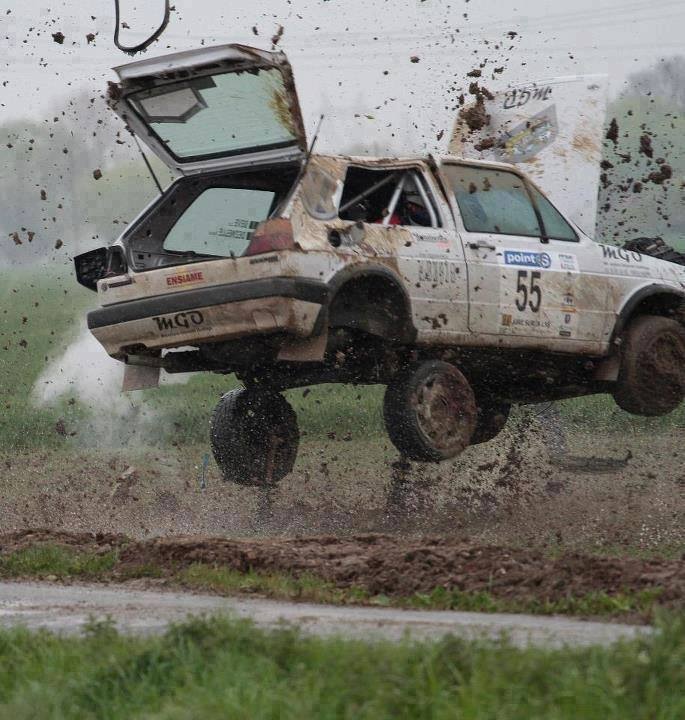
Holly suspension travel!!!

Rally racing Citroen
Tribute to the world of auto racing.
Rally racing Citroen

Pimped by an Astronaut and styled by Giorgetto Giugiaro, the Suzuki RE5 was powerful but fatally complex. It looked like the mid seventies super-bike it might have been – but with that ugly radiator thing up front and the ‘tin-can’ cluster of instruments sitting on the lamp, this was ultimately one step too far for a market composed largely of unreconstructed grease-monkeys.

Mazda Cosmo
The first real sports car to come with a rotary engine was hand-built and beautifully stylish in its conception. Toyota’s 2000GT comes close but for us this is one of the prettiest Japanese sports cars ever produced. And it featured in Return of Ultraman. Nuff said.

NSU Spider
The debut of the Wankel engine in production at Frankfurt 1964 was a cute if ill-conceived topless runabout. With the motor stuck in the back and with a light frame – the thing must have been fun to drive. Back happiness, though, did not amount to success and the radiator and other components were put in the front to counteract the weirdness. The lack of storage space meant that the car fell between two stools and only sold around 3000 units.

Mazda RX7
The mature rotary sports car from Mazda looks better every year. Possessed of that uniquely Japanese brand of accessible sportiness, 36 years on from launch you can see how revolutionary it must have looked on release. Hi-revving and light with the engine just behind the front axles, the RX7 is top of our list of future classics.


Of all the publishing houses dedicated to culture of cars and bikes, Veloce is surely the most prolific. This time, they’ve come up with something no bike obsessive and consumer of culture will be able to resist.
Alastair Walker’s book is a look back at the glory days of the Café Racer, from Friday night gatherings on London’s North Circular road, through the street specials craze of the Seventies, to the modern day revival.
From its roots in the ’59 Club, home-brewed specials and the creation of the Triton by Dave Degens, the Café Racer became the must-have Rockers’ motorbike. It then became the template for a new generation of fast road riders in the 1970s, with the rise of Dunstall, Rickman, Seeley and many more bespoke bike builders.
The big factories jumped on the bandwagon too. Machines like the Moto Guzzi Le Mans Mk I, Ducati 900SS and the MV Agusta 750S all captured the spirit of the Café Racer. Then the slick, super fast, Japanese sport bikes of the 80s came along, and looked set to consign the Café Racer special to the history books.
But a revival had to happen. The Ace Café London re-opened, bike builders as diverse as Wakan, Fred Krugger, Nick Gale and Roland Sands all began to create lean, back-to-basics motorcycles, but with their own unique twist on Café Racer heritage. From the Buell 1125 CR to the Guzzi V7 Sport, mainstream modern bikes have also re-discovered their street racing soul.
This is required reading for lovers of bikes with a beating heart.
image courtesy Deus Ex Machina.


2012: V12 Zagato All Images Zagato
The V12 Zagato is just the latest in a long line of collaborations between the house of Zagato and Aston Martin. The V12 is a snarlingly exotic but beautifully coherent design that perfectly blends the philosophies of its parents. Stainless steel exhausts, forged lightwight alloys and the distinctive flowing blends of the coachwork make this ‘ring- tweaked monster one of the greatest Zagato penned cars ever produced. Limited numbers will guarantee its resonance too.
2002: DB7 Zagato

For me this was an example of Aston Martin trying to guild a very beautiful lily. But what a success! Just 99 of these green beauties were made, with that signature Zagato ‘double bubble’ roof line and sculptured rear window. Unique interiors, tail lights and alloys made the perfectly proportioned DB7 design sing. That bulbous grille gulps air and accentuates the base – making this production car look fit for endurance racing right out the box.
1986: AM V8 Vantage Zagato.

The burly English officer here gets the Z-treatment, rounding off the edges and launching what was a rather lumpen Aston martin into the rare supercar stratosphere. Caused much ambivalence when launched in the mid Eighties at geneva, around fifty were actually produced and immediately soared in price in resale value. The convertible is even more rare, and doesn’t retain the coherence of the coupé’s design. Still, a great example of how juxtaposition of design philosophies can sometimes produce bracing results.
1960: DB4 GT Zagato.

The first Z-Aston collaboration was shunted around by racers like Stirling Moss. It was super light and super quick, with perspex and aliminium replacing the glass and steel of the rump DB4. We reckon the Zagato design inspired the more flowing design of all subsequent Aston Martin cars. With only 20 ever having been produced the price of these cars is now well into seven figures – a real piece of design and racing history.
– See more at: http://www.influx.co.uk/wordpress/features/aston-martin-x-zagato/#sthash.xAsNS8E4.dpuf
Proudly powered by WordPress | Theme: Baskerville 2 by Anders Noren.


You must be logged in to post a comment.